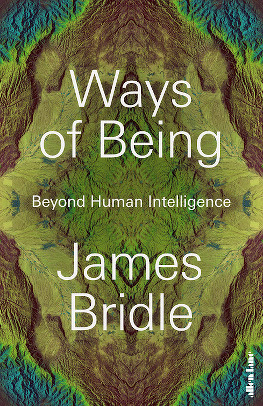
📚 Ways of Being by James Bridle
Ways of Being- Animals, Plants, Machines: The Search for a Planetary Intelligence was published in April 2022, mere months before the first public version of chatGPT was released. In a way it is a time capsule of a time before the conversations and consequences of AI were at an emotionally charged fever pitch.
Yet author James Bridle carves out a well-argued and fascinating niche arguing against corporate, extractavist AI paradigms and their accompanying data centers but for non-human and artifical intelligence as a concept and going further to say that plants and animals already have incredible intelligence that is worth studying and working together with.
Notice I said “working together with” and not something like “harnessing” that is because Bridle advocates against the old models of humans being in charge of everything. He notices that the way we are currently thinking about AI is similar to the way we Westerners historically have thought about animals: worker, pet, threat, or invisible in the background. Instead he hopes we can think of ourself more entangled in a big system where human are but one part of it.
Bridle puts this book under the umbrella of the “ecology of technology” which I really like. Although it seems counterintuitive it is important to put technology and its material effects in a conversation with all of the ecological and human systems. To think of it as continuous and not as binary or oppositional.
This is where the book is at its most inspiring. Chapters like Nonbinary Machines and Getting Random take a look at what computing could do if it were more like how natural systems act in the world. At some point he proposes three conditions for better, more ecological machines. 1) to move away from computers running on binaries that reduce the complexity of the world in sometimes violent ways. 2) to work towards decentralization in both the corporations that run everything but also a decentering of the individual and towards the collective good. 3) be more comfortable with machines that are unknowing, which I take to mean moving towards machine learning instead of programmed rules.
There’s plenty I would push back on in this book but I also found my perspective greatly expanded by his framing of the ecology of technology and connecting the dots between how we humans treat the vast intelligences that already exist on this planet and how we might co-exist with the upcoming types of artificial intelligences. It was the exact type of non-binary framework I was hoping to find to think about these big changes in more productive ways.