New posts from jordanlee.life
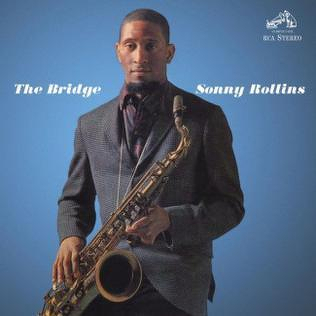
🎵 Sonny Rollins - The Bridge (1962)
When I started this blog in January, I was interested in giving myself a space to find organic musical connections outside of the flood of new albums that release faster than can be contextualized. For years I had found the flow of the new too fast and the historical archives too vast to engage with. What I can keep up with is music that comes into my life through friends, circumstances, and coincidences. It is the latter category which brings Sonny Rollin’s The Bridge into my life.
Last weekend I attended Newport Jazz Fest for the fourth year. It functions partly as a way to learn to appreciate jazz through immersion and also as a yearly family vacation that fits the venn diagram of everyone’s interest. Little by little I have started seeing the immensity of the genre- the far out music theory, the virtuosic playing, the skill of listening and playing simultaneously during improvisation, the vital ways it shaped other music. This year had newcomers like SML which push jazz in a modular synth and krautrock direction alongside soul-stirring legends like Charles Lloyd.
When I got back home from the trip, I felt a strong urge to walk across the Williamsburg Bridge, which connects Manhattan to Brooklyn over the East River. It is a beautiful stroll that always helps me clear my mind and appreciate the immensity of the city against the water. On the train ride back I saw a article in n+1 written by Nate Wooley about the jazz saxophonist Sonny Rollins, someone I had always meant to check out. I had no idea that from 1959 to 1961 Rollins took a break from recording and performing and went to that very bridge every single day to practice saxophone for hours!!
When I got home I gave his album based off of this time, aptly named The Bridge, a listen. At first it seemed like any other jazz album that might be playing in the background somewhere, but I let myself settle in and hear his years of searching while looking at the same water I had just peered into. I thought about what other music was being performed in America in 1962, stuff like I Want To Hold Your Hand by the Beatles. I appreciated the delicate ways his melodies threaded through space and the expert accompaniment the guitar layed down making the complex sound simple. I’m sure someone has told me to listen to this album in the past yet it took the actual living of life before it sank in.
📚 Getting Off with the Luddites
I’ve been impressed and inspired by the NYC luddite scene which has helped historically contextualize this dystopian big tech moment and wisely pointed to the positives of community, solidarity, and FUN instead of just the evils of technology. I found myself vigorously agreeing with most of this great profile of them in n+1. Perhaps it could be a new political home to try out?
Getting Off with the Luddites | Sarah Thankam Mathews
The Luddites see Big Tech as having eroded commonality: the common good, the social fabric, the institutions of collective interest. Luddism, as they conceive of it, is a communal, spiritual, and political project centered on three things: reclaiming collective agency away from Big Tech and its attention-fracking, data-capturing, social erosion project; re-enchanting public life through public events that help people experience connection; and fostering a world rooted in localism, public goods, care, fun, democracy, and what one Luddite I spoke to referred to as “collective effervescence.”