
🎵 Touch Girl Apple Blossom - Graceful (K Records 2026)
Named after a Beat Happening lyric, I really enjoyed TGAB’s upbeat, jangly set at Providence Popfest last month. Luckily the album, out on K Records, is a great encapsulation of that same catchy DIY charm.

📚 Amusing Ourselves to Death by Neil Postman (1985)
I’ve been seeing this book pop up a lot lately and finally decided to read it after a strong recommendation from Liz. Postman argues that the television is a culmination of the instantaneous speed of the telegraph with the visual nature of the photograph and has shifted our culture out of the age of typography into the age of show business- changing how we think of news, education, and social interaction.
The book first takes a historic look at how the technologies associated with writing totally changed society and brought with it new ideas like a sense of linear history and the ability to make fully cited, complex propositions that could be refuted point by point. Apparently In 1800’s America, three hour public debates were popular forms of entertainment even among the working class. Can you imagine our collective attention span handling that now?
He believed the television brought with it a new ideology where the viewer needed to be constantly entertained through tactics like attractive people, short decontextualized bursts of information aka “news of the day”, no time for introspection or ability to have serious debate, and of course the barrage of fifteen second commercials psychologically tuned to tap into our deepest longings.
The problem is that even if we don’t watch TV ourselves he demonstrates how the dominant media technology of the day still has major downstream effects on every part of our lives. I think that is why this book from forty years ago has become popular again, because his description of the ills of television have only accelerated in the age of social media.
I agree with his conclusion which is a call to be more aware of the ways a media technology shapes our actions and find ways to push back. He calls for a demystification of how media is made. I think these are great points and makes me feel validated in a pull towards small scale DIY types of distribution and a desire to regain my attention to handle more rewarding works.

🎵 Matt Evans - Daydream Observatory (2026)
Percussionist extraordinaire Matt Evans has a new album of synth and rhythm which pulls sounds from the alien and the mundane to make compelling and inventive instrumentals. Matt is also one half of Neti-Neti who I wrote about back in April after their moving show at the Poetry Project exploring the need for modern Western societies to have public grief rituals.
Shoutout to Jeremy Shatan’s great music blog anearful for bringing this album to my attention through his weekly newsletter.

A new type of LLC for artists (via hyperallergic)
I have been following the journey of the proposed A Corp LLC structure for a while now and it looks like it just passed in the Colorado legislature. I know it sounds boring, but an A Corp would have some interesting advantages since it is specifically for creative fields like making sure the artists keep 51% of the shares, being mission driven, making it easier to share equity with large groups of collaborators, and having less onerous paperwork than a traditional LLC.
Like any new framework I’m sure it will have its problems once it meets reality but for now I think it could occupy an interesting niche.
Critical Listening interviews Maine Music Alliance
I was really inspired by Liz and Max’s podcast interview with two members of the Maine Music Alliance who sucessfully stopped a Live Nation venue from coming in and disrupting the local scene in Portland, Maine. I found the conversation to be especially helpful in demystifying the process of dealing with local government and how to change conceptual arguments into ones that are legible for policymakers.
🎵 Judee Sill - s/t (1971)
This blog is making me realize I have a type- quasi-religious mystics who make folk music that draws from a wide array of influences. In this case Sill’s songs switch seamlessly between winsome country to baroque counterpoint in her lyrical cosmology of angels and cowboys.

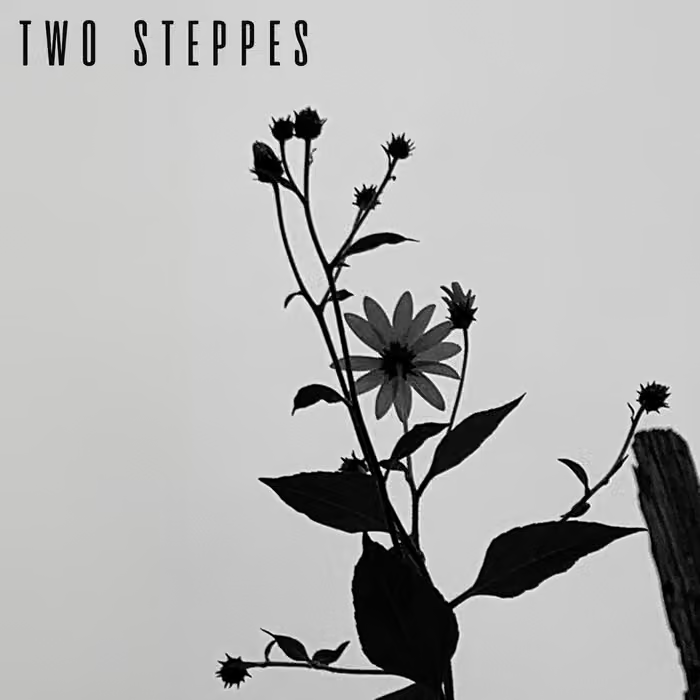
🎵 Two Steppes - Bowl of Flowers (2025)
This cassette arrived in the mail today from fellow Brooklyn DIY lifers Two Steppes. After taking a long break from music I’m so glad that Drew Gibson is back- pivoting away from harsh noise to something hazily melodic but with hidden depths and textures.
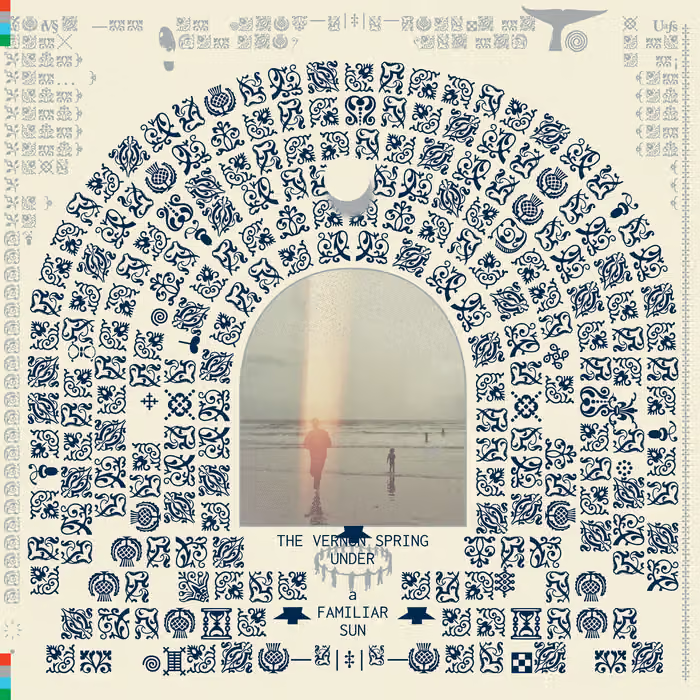
🎵 The Vernon Spring - Under a Familiar Sun (2025)
I had missed this album last year but was reminded of it through a collection of remixes that came out last week. Producer Same Beste has a way of pulling at the heartstrings with these glitchy piano de-compositions from which beautiful sounds bloom
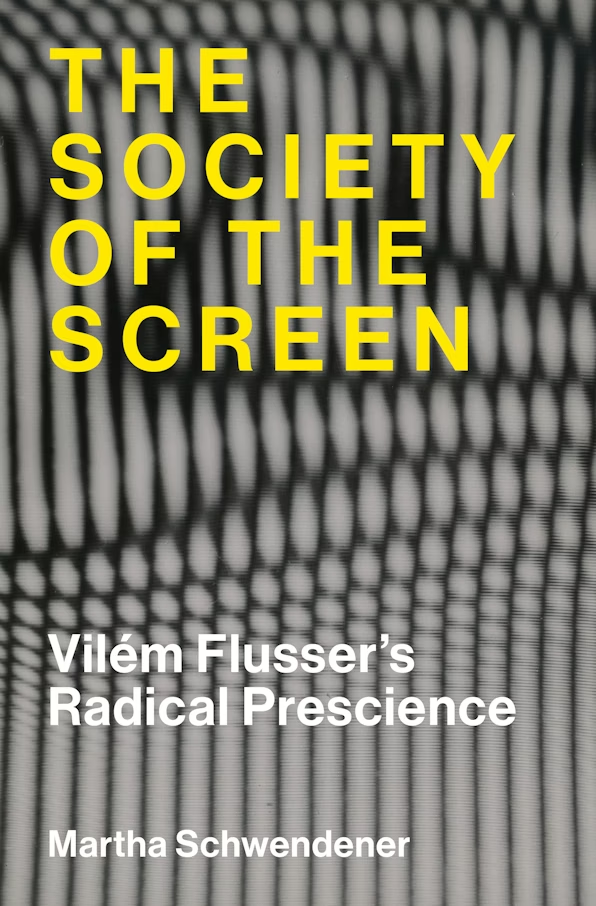
🎙️ Martha Schwendener interviewed by Ben Davis about Vilém Flusser
I posted back in April about the prophetic and fascinating writing of the late theorist Vilém Flusser which predicted the image based society, the “apparatus” that serves them and builds a feedback loop with the user, and the need for humans to develop “technical imagination” as a way of not being programmed by their own machines.
I was excited to see that art critic Martha Schwendener recently wrote a book about him since he is still relatively unknown in English speaking countries. I’m also a fan of Ben Davis' writing (especially 9.5 Theses on Art and Class). As I hoped, this podcast conversation added a lot of interesting context to the life and writing of Flusser. I hope to pick up the book at some point.
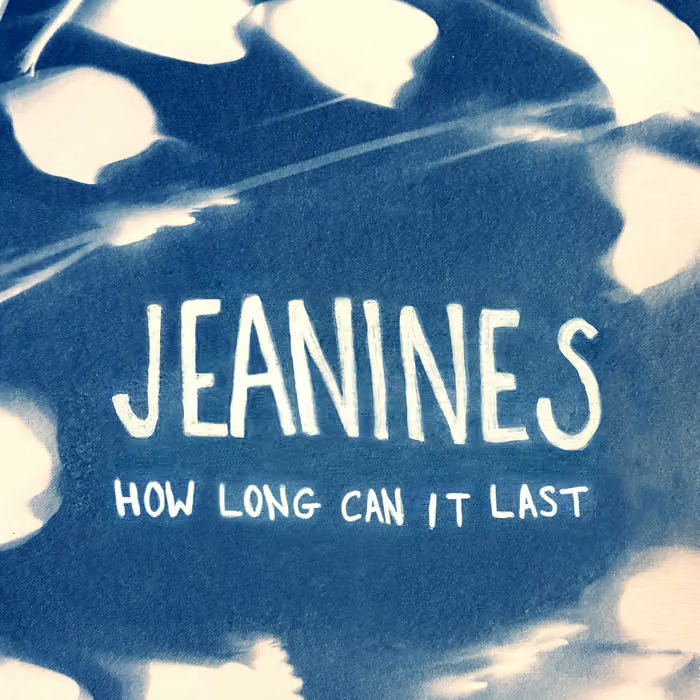
🎵 Jeanines - How Long Can It Last (2025)
I spent my birthday weekend at Providence Popfest in Rhode Island and revelled in two days of indie pop of all stripes. The festival was well organized and curated but still clearly from the DIY tradition with small shows, happy reunions, and a refreshing level of transparency from the bands and organizers.
One of my favorite performances was Jeanines who blasted through a set of 100 second pop gems which all managed to have great melodies and lyrics and Mamas And The Papas level vocal harmonies, I was blown away. My favorite song was Turn On The TV from a 2022 album but overall I’m drawn their newest record, How Long Can It Last.
Aidan Walker's review of Language Machines by Leif Weatherby
Aidan Walker aka How To Do Things With Memes wrote a interesting review of Language Machines which turns to the 20th century structuralist (and deconstructuralists) philosophers to understand how we got to the point of LLM’s making “language without cognition”. I think he makes some good points about language already being artificial and how this moment forces us to peel away the some of our assumptions about what language is and how it relates to the supposed uniqueness of humans.
So I think as we search for a “real humanism” — one that lies in actual people and their tangled experiences of the world, rather than in some ideal, untouchable essence the computer can never replicate — we must be careful and playful in equal measure. Careful, because the stakes are high and the situation demands diligent work that watches closely. Playful, because in a moment when language has become “a service” on tap that constructs itself without the steering of a human hand, all the cliches, omissions, and biases that are coded within language will bloom unchecked like algae in an unmoving pond.
In the era of its autonomous construction, the task of deconstructing language — looking at language and saying “hold up a second,” Uno-reversing the binary, joking, probing, unpeeling — becomes even more important. Which is why I love Language Machines, and why the way forward must include poetry, rhetoric, and memes.
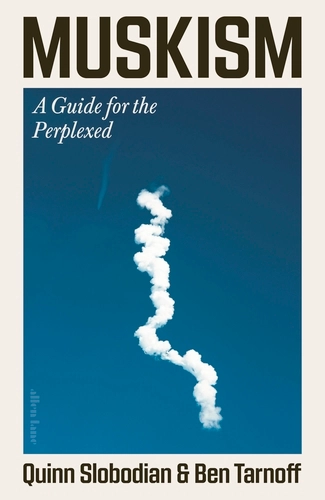
📚 Muskism by Quinn Slobodian and Ben Tarnoff
I’ll start this review with a confession: I try to ignore reactionary rich guys who try to dominate the news cycle. I think of it as a practice to protect my mental health and a way to deprive them of the attention and clicks they seem to crave. Yet after hearing these authors give a compelling book talk I ended up picking up this slim work analysing the Musk economic and ideological system and couldn’t put it down.
Slobodian and Tarnoff cover Elon Musk’s South African upbringing, his uncanny ability to be technologically ahead of the curve and raise capital through “finacial fabulism”, and eventually his fear of AI, the desire to merge with it, and his social media fuelled rightward turn to some truly repulsive ideas about race, gender, class.
The authors avoid the traps painting him one dimensionally as a genius, or villian, or lunatic. Instead it is well researched with his bizarre behavior well contextuallized within broader movements. The authors idea of “cyborg conservativism” where Musk both is a transhumanist while hating trans people was especially illuminating. To him the “woke mind virus” isn’t a joke. He seems to see the world as code and human empathy and progressivism as a suicidal bug that must be erradicated before humanity can ascend.
I wonder how we stand stand up against the worlds richest man who is literally fighting to change what it means to be human, who is using his immense capital to accelerate the exact idealogies and technologies that I fear the most.
🎵 Parallelisme - mui zyu (Father/Daughter 2026)
I enjoyed the melancholy art-pop of mui zyu’s last album so I was intrigued by her cover of Miharu Koshi’s 1984 song Parallelisme. I not only loved the cover but found the original’s harsher industrial textures to be an equally compelling contrast.

interesting interview with Nathan Schneider on governing online spaces
Airbnb, Uber, & Meetup wanted better exit options
Elle: Are you saying online life should be more democratic if we want a more democratic society?
Nathan: It’s less that they’re antidemocratic, and it’s more that they didn’t even try. That’s why I call the feudalism “implicit”—because people were calling the early internet “democratic” when a lot of these norms were forming. But in actual practice, they did not set up tools for collective decision making, or the basic features of democratic life that people like Alexis de Tocqueville or Robert Putnam knew as everyday democracy.
The practices that we might experience in a garden club, a labor union, a neighborhood club, or a mutual insurance organization—none of these are present in the corporate platforms that now run the internet, or even the very community-driven platforms that came before the internet was commercialized. In some respects, it’s not just a critique of corporate power that I’m talking about. It’s actually an ideology that came before. Corporations figured out how to make gobs and gobs of money on the internet, but now we’re seeing the deeper consequences.
Neti-Neti - Echo of Being / Grace in Rot (2024)
A couple days ago I went to the Poetry Project here in NYC to see Neti-Neti, a group whose thoughtful exploration of grief and ritual was something I wanted to hear ever since Amirtha Kidambi’s excellent interview on Critical Listening. The performance of percussion and effected vocals opened up all sorts of sonic and spiritual pathways and I felt a little physiologically different after, maybe lighter.
Even though in Buddhism and in most therapies, one is supposed to sit with difficult feelings before trying to “fix” them, I hadn’t thought about how those same dynamics may play out as a group in a room or even a nation. It is such a heavy, erratic time and opening up space to sit with it before talking about ways forward felt radical in our escapist era.
🎵 Flore Laurentienne - Volume III (2026)
This is the first time in the history of this young blog where I post about the same artist twice, but I’ve been enjoying Flore Laurentienne’s new work as a continuation and expansion of his past two volumes of instrumental string and synthesizer work.
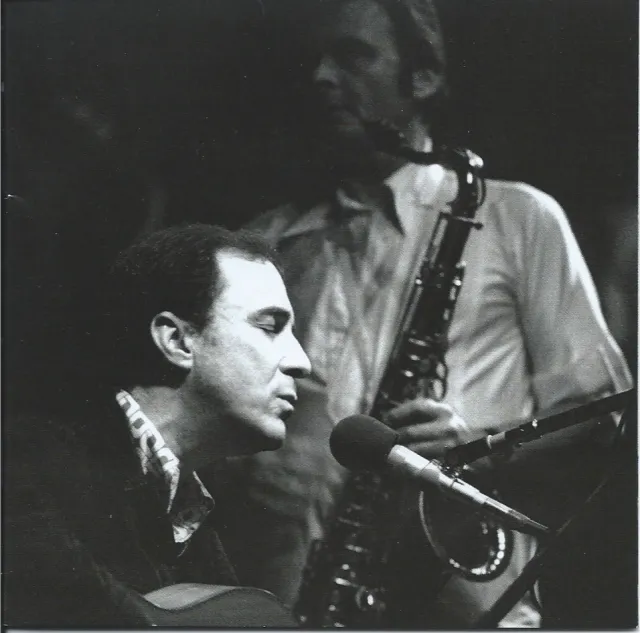
🎵 Stan Getz Featuring Joao Gilberto - Aguas De Março (1976)
Waters of March has been billed as one of Brazil’s most popular songs but I had never paid it much attention other than as enjoyable background music. That changed recently when it played in a cafe and I was bowled over by the stream of consciousness lyrics which speak of the cycles of life and decay. Using a cascade of seemingly opposing snapshots Antônio Carlos Jobim paints a rich non-dualistic picture of life.
What makes the song resonate further for me, is that it was written during a fascistic period of Brazil where journalists and artists were being jailed and murdered for speaking out against the regime. In this tense time, Jobim was able to use the Zen-like calm of bossa nova and powerful metaphor to offer an opposing narrative to the air of inevitability that the authoritarian regime was trying to project.
A youtube comment adding some interesting context, reminding listeners that March is Brazil’s start of autumn and one of mud, rain, overflowing rivers. This is not necessarily a song of blooming but something messier, torrential.
It’s the wind blowing free, It′s the end of the slope, It’s a beam, it′s a void, It’s a hunch, it′s a hope
Kevin Munger on Vilem Flusser's Communicology
In my little corner of the web there seems to be a resurgence in studying media theorists who were noticing big changes in culture happening from new media technologies like the television and extrapolating their idea for the internet age. There’s been Marshall McLuhan (the medium is the message), his student Walter Ong (we are switching from a literary society back to an oral one), Neil Postman (television forces information to be amusing and decontextualized).
But I had been a bit intimidated by the ideas of Vilem Flusser who in the 80’s was predicting machines that could generate personalized images for the user and adapt to their preferences until it becomes a feedback loop becoming stronger with each iteration.
I thought Kevin Munger’s video on Flusser’s Communicology offered a good entry point and rallying cry on how to study and escape the spiral we seem to be in.
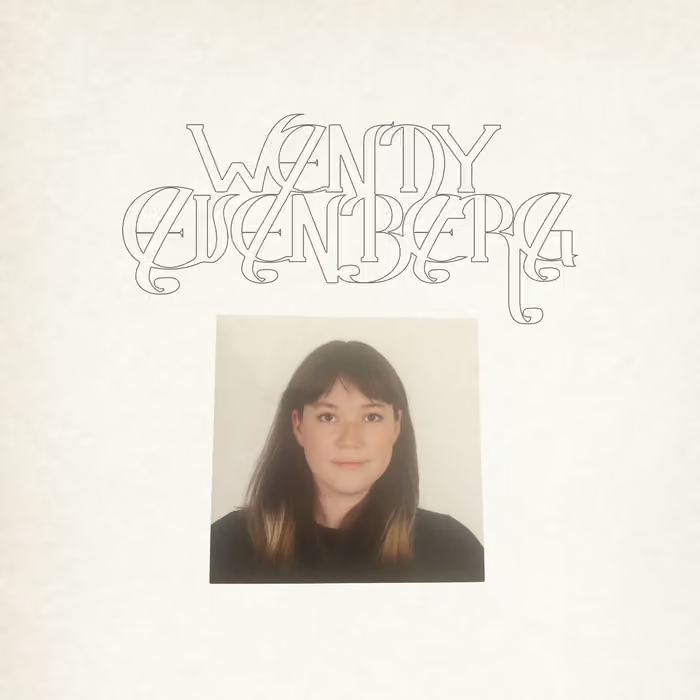
Wendy Eisenberg - s/t (Joyful Noise 2026)
I’ve enjoyed seeing Wendy play guitar in a wide range of experimental contexts over the decade but this new record takes those experiences and applies them to more conventional song structures. With their cosmic lyrics and Mari’s strings, I’m totally hooked
The Price of Democracy: The Revolutionary Power of Taxation in American History
I was fascinated by historian Heather Cox Richardson’s interview with Vanessa Williamson on her book The Price of Democracy: The Revolutionary Power of Taxation in American History.
In addition to learning about the way attitudes on taxes have shifted over the past 200 years, she lays out the case that taxes are a way to involve accountability to the people in government spending which is why the Trump administration has increasingly turned to alternative things like tariffs, fees, corporate donations, and spoils of war to fund their unpopular agenda.